Poster - Huiji Im, Orchid in Ink
- In stock, ready to ship
- Delivery in 5–7 business days
- Free worldwide shipping* on orders of €60 or more
* For deliveries to countries outside Europe, the United Kingdom (UK), North America, Brazil, and Japan, additional import duties, customs duties, import VAT, or customs clearance fees may apply depending on the respective delivery and production locations. These costs are to be borne by the recipient.
ARTLIA's art prints are produced according to standardized paper and canvas formats.
Depending on the aspect ratio of the original artwork and the chosen format, it may happen that the edges of the image are slightly adjusted to achieve a harmonious overall effect and high print quality.
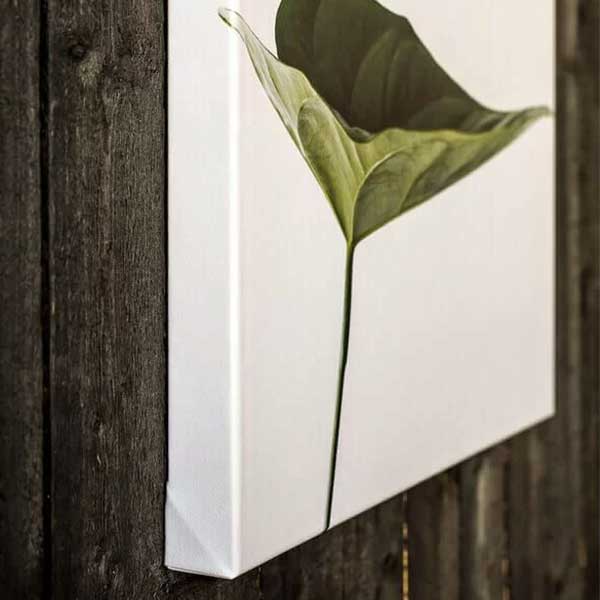
For canvas prints, the ARTLIA team ensures that the main motif is placed as fully as possible on the front side. The side frame areas are continued in color and style to match the original image.
This is a deliberate and common production step with which the ARTLIA team ensures the aesthetic quality of each artwork.
One motif, many styles: discover our diverse collection


Poster - Huiji Im, Orchid in Ink, Orchid
Make a striking statement in any room with this framed poster - Orchid in Ink by Huiji Im. Printed on high-quality, thick, matte paper.
• Paper weight: 189 g/m²
• 0.26 mm (10.3 mil) thick
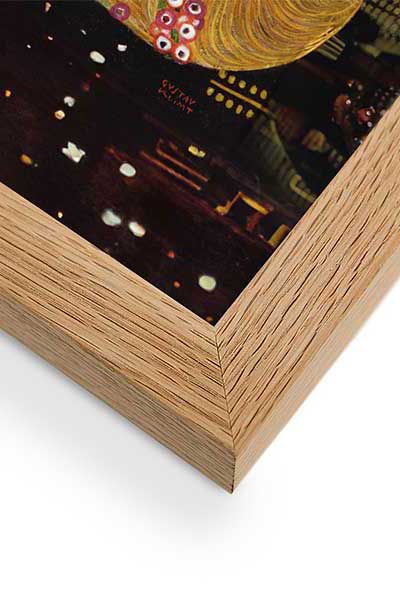
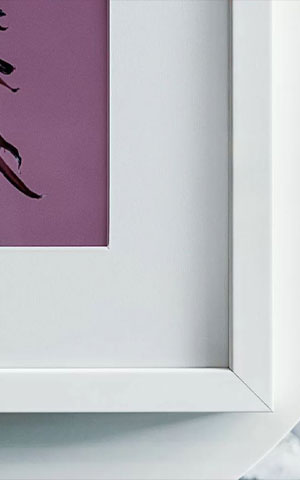
• Black and white frames made from semi-hard alder wood
• Solid oak frame
• Acrylic front protection sheet
• Includes hanging hardware
• 21 × 30 cm posters are A4 size
• Raw product components in the USA from Japan and the USA
• Raw product components in the EU from Japan and Latvia
How to attach the hooks to horizontal 61 × 91 cm frames:
Attach each of the mounting hooks 2.5 cm from the frame corners when hanging the poster horizontally.

Orchid in Ink
Huiji Im, 임희지 (1765–?)
The Beauty of Simplicity - A Poetic Depiction of an Orchid from Korea’s Joseon Dynasty.
With remarkable lightness, Huiji Im brings the delicate beauty of an orchid to paper. Its long, curving leaves and delicate blossoms unfold in just a few expressive brushstrokes. The result is a harmonious interplay of dark ink, delicate lines, and generous open spaces, lending the motif a special elegance.
The depiction draws its strength from restraint. Instead of portraying the plant in rich detail and true to life, the artist focuses on its characteristic forms and natural movement. Every brushstroke is deliberately placed and contributes to the harmony of the composition. It is precisely this reduction to the essentials that gives the work its quiet expressive power.
The Orchid - A Symbol of Elegance and Inner Strength
In traditional Korean and East Asian art, the orchid is far more than a decorative plant motif. Together with bamboo, plum blossom, and chrysanthemum, it is one of the “Four Gentlemen.” These four plants symbolise virtues especially prized in classical scholarly culture: integrity, modesty, steadfastness, and purity of character.
The orchid embodies above all grace, restraint, and inner dignity. It often grows in secluded places and reveals its beauty far from the public eye. It was seen as a symbol of a cultivated person whose character and inner composure matter more than outward wealth or social recognition.
In this way, the subject conveys a sense of beauty that need not be loud or showy. Its effect unfolds instead through naturalness, balance, and quiet elegance.
The Expressive Power of Ink
Traditional Korean ink painting is distinguished by a special blend of technical precision and artistic freedom. Unlike colorful depictions, its effect is created above all by the different qualities of the ink and the movement of the brush.
Depending on pressure, speed, and moisture, bold lines, soft transitions, and subtle gradations between deep black and delicate gray emerge. A single brushstroke can express the shape of a leaf, its movement, and its vitality all at once.
This style of painting requires extensive practice and confidence. The artist must master the movement of the brush while also finding the right moment to create a line. Corrections afterward are possible only to a limited extent. That is why every stroke has special significance.
The apparent simplicity of the image is therefore not a sign of incompleteness, but an expression of a deliberate artistic choice.
The Beauty of Empty Space
The unpainted space is just as important as the painted forms. In East Asian art, emptiness is not seen as unused space, but as an independent element of design.
The open areas of the paper give the leaves and blossoms room to breathe and lend the composition an exceptional lightness. They create a visual balance between depiction and stillness. The eye can move freely without being overwhelmed by details.
This deliberate restraint is an essential part of East Asian visual aesthetics. It invites us not just to glance at the artwork, but to take in its forms, spaces, and subtle nuances.
Korean Literati Painting – an Art of Inner Composure
During the Joseon Dynasty (1392–1897), Korea developed a significant tradition of literati painting. It was closely connected to the intellectual and cultural world of educated scholars. The focus was not solely on depicting a subject faithfully, but also on the artist’s personal expression.
Plants and landscapes often served as vehicles for deeper meanings. They reflected ideas about character, morality, and a harmonious relationship with nature. A painting’s quality was therefore measured not only by its attention to detail, but also by the confidence of its brushwork, the balance of its composition, and its spiritual expressiveness.
The orchid holds a special place in this tradition. Its delicate appearance and symbolic significance made it a popular subject, through which ideas of modesty, learning, and inner perfection could be expressed.

Timeless Elegance for Modern Spaces
“Orchid in Ink” combines the natural beauty of a plant with the understated aesthetic of traditional Korean painting. The fine brushstrokes, monochrome palette, and deliberate use of open space give the work a calm yet expressive presence.
As an art print, this historical subject brings a piece of Korean art history into the present. Its subtle colors and clear visual language pair especially harmoniously with modern, minimalist, and naturally styled interiors.
Whether in the living room, workspace, or a quiet retreat, the orchid makes an impression without dominating. It represents a form of elegance shaped not by transience or passing trends, but by simplicity, balance, and inner calm.
A special work of art for everyone who appreciates traditional Asian painting, botanical subjects, and the timeless beauty of expressive brushwork.
Life dates: 1765–?
Period: Joseon Dynasty, Korea
Subject: Orchid
Original medium: Ink on paper
Original collection: National Museum of Korea, Seoul